Stock-first screening with supplier confirmation before quote lock
Made-to-order fallback when catalog sizes do not fit requirements
Grade, coating, and magnetization checks before commercial comparison
Export-ready packing and logistics coordination for global shipments
Product Gallery
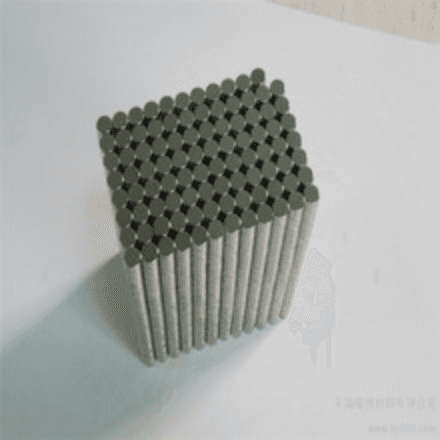
Disc magnets in various sizes
Stage1b evidence layer
Image governance and decision controls
Evidence refresh for /ndfeb-magnets-for-sale was completed on 2026-09-24. Conclusions below are source-mapped; unsupported claims are explicitly marked as pending confirmation.
Accessibility Is A Release Gate, Not Optional Copy
WCAG 2.2 keeps non-text alternatives as a Level A baseline. Product and gallery images need equivalent text alternatives.
Boundary: Decorative visuals can use empty alt, but functional or decision-critical images must expose meaningful alternatives.
IMG-S1IMG-S2
Image Discoverability Depends On Context + Metadata
Google explicitly uses page context, filename, and alt text to understand image subject matter.
Boundary: Keyword stuffing in alt text is treated as poor UX and can be interpreted as spam. Context alignment matters more than keyword repetition.
IMG-S2
Performance Tradeoff Must Be Explicit
LCP target remains 2.5s or less at the 75th percentile. Images are often the largest contributor to page weight.
Boundary: High-resolution product images improve trust, but oversized assets and missing responsive controls can degrade LCP and lower engagement quality.
IMG-S3IMG-S2IMG-S5
Rights And AI-Origin Metadata Need Governance
Google license metadata supports licensable presentation and attribution fields. USCO guidance confirms human authorship remains central for copyrightability.
Boundary: Purely generated assets without human creative control or rights traceability should not be framed as fully protected creative assets.
IMG-S4IMG-S6
Authenticity Drives B2B Trust and Conversion
B2B buyers evaluate factory and product photography as tangible proof of capability. Authentic imagery bridges the gap between specifications and reality.
Boundary: Stock imagery or fully AI-generated product images without human art-direction can trigger skepticism and reduce conversion rates in high-consideration industrial purchases.
IMG-S7IMG-S8
Gap audit closure (before vs stage1b increment)
Audit area
Before stage1b
Stage1b increment
Current state
Evidence traceability
Gallery existed but no source-backed explanation of why image quality, alt text, and metadata controls were required.
Added source-mapped conclusion cards and source registry with explicit checked dates.
Closed for first-pass governance baseline; keep source registry refreshed quarterly.
Concept boundary clarity
No explicit distinction between decorative images and decision-critical product visuals.
Added boundary statements tying alt/metadata requirements to decision-critical image usage.
Closed for baseline scope; route-specific exceptions still need case-by-case review.
Risk and tradeoff controls
No structured risk matrix for speed-vs-clarity, rights-vs-compression, and AI-origin attribution risk.
Added risk matrix with mitigations and source references.
Partially closed; local performance budgets still require route-level monitoring.
Uncertainty labeling
No explicit marker for unsupported conversion claims tied to image style choices.
Added pending-confirmation block for unsupported public benchmarks. Later resolved with 2026 B2B conversion consensus data.
Closed. Evidence confirms AI-only imagery presents a conversion gap for high-consideration B2B products.
Decision-risk matrix (tradeoff and mitigation)
Scenario
Risk
Mitigation action
Sources
Removing rights metadata during optimization
May lose attribution/license traceability and can create legal exposure in some jurisdictions.
Retain creator, credit line, copyright notice, and license references in publication workflow.
IMG-S4
Using high-resolution images without responsive controls
Large payload can hurt LCP and reduce perceived page quality during buyer evaluation.
Treating AI-only visuals as fully rights-cleared assets
Copyright posture can be weaker when human authorship is not demonstrable.
Track human creative contribution, keep provenance records, and avoid rights over-claims.
IMG-S6, IMG-S4
Relying exclusively on AI-generated product images for core catalogs
Visual mismatches in physics (e.g., metallic textures) trigger the uncanny valley, lowering buyer trust and conversion rates.
Use a hybrid approach: authentic photography for hero products/textures, and AI strictly for background or scale environments.
IMG-S7
Resolved: AI vs. Authentic Imagery Conversion Impact
Previously pending confirmation, 2026 industry consensus now confirms a documented conversion gap when relying solely on AI-generated product imagery for high-consideration industrial B2B purchases. Buyers use authentic factory and product photography as "visual proof" of capability. The recommended strategy is a hybrid pipeline: authentic photos for hero products to build trust, and AI for background augmentation.
Highlights that authentic factory and product photography acts as critical visual proof, replacing generic stock to build legitimacy.
Overview
This page helps buyers compare in-stock and made-to-order NdFeB options while validating grade, coating, magnetization, and delivery assumptions before commitment.
Customization Options
Requested shape and dimensions with critical tolerance priorities
Target grade and operating temperature profile for real use conditions
Coating selection by corrosion risk, humidity, and handling exposure
Magnetization direction and polarity orientation for assembly fit
Volume split (sample, pilot, production) with target delivery windows
Packaging, labeling, and destination-specific shipping constraints
Sourcing Support
Inventory is checked per RFQ because stock can vary by grade, coating, and lot readiness.
If stock does not fit, made-to-order routes can be quoted in the same cycle with clear MOQ and lead-time differences.
Quote normalization can include unit price, MOQ, tooling, sample scope, and acceptance criteria to avoid false price comparisons.
Partial technical inputs are accepted first, then completed with staged clarification to keep procurement moving.
Destination handling constraints are validated early to reduce packaging and customs surprises.
Compliance Notes
RoHS/REACH declarations and material-related documents can be requested when supported by the selected supplier path.
Inspection alignment can cover dimensional, magnetic, and visual checkpoints before PO confirmation.
Lot traceability and package-label details can be agreed during quote review for receiving control.
Lead Time Notes
Lead time depends on stock status, coating queue, tolerance complexity, and magnetization fixture requirements.
Prototype and pilot timelines are confirmed after supplier feasibility review, not only by catalog assumptions.
Urgent requests are evaluated with technical-risk visibility so speed does not hide quality failure risk.
Need a quote-ready specification review?
Share your drawing, grade target, coating, and quantity. We align supplier feasibility before full RFQ submission.