Update 1: quantified limits
Added DOE Table 2 numeric boundaries for BHmax and operating temperature so teams can reject unfit routes before quote comparison.
Comparison report
Conclusion first: neodymium magnets are part of the rare-earth magnet family. The real decision is usually NdFeB versus SmCo, then validating thermal, corrosion, and supply-risk assumptions before RFQ release.
Added DOE Table 2 numeric boundaries for BHmax and operating temperature so teams can reject unfit routes before quote comparison.
Added dated MOFCOM control and licensing signals to separate policy headlines from execution steps buyers can verify in RFQs.
Added explicit unknown-data labels with minimum next steps so teams avoid overconfident decisions when public evidence is thin.
Each conclusion pairs a decision statement with evidence and explicit boundary conditions.
Neodymium magnets are one subset of rare-earth permanent magnets, not a separate category.
Evidence: DOE 2022 defines rare earth permanent magnets mainly as NdFeB and SmCo families.
Boundary: If your team is only comparing NdFeB grades, you are still inside the same rare-earth family.
DOE Table 2 shows NdFeB and SmCo are not interchangeable once operating temperature is explicit.
Evidence: DOE 2022 Table 2: NdFeB BHmax 35-52 MGOe and operating 80-200 C; SmCo BHmax 16-30 MGOe and operating 250-350 C.
Boundary: Exact crossover still depends on grade suffix, magnetic circuit, and accepted flux drift under duty cycle.
NdFeB often needs protective coatings, while SmCo usually brings better corrosion resistance but higher brittleness.
Evidence: DOE 2022 Table 2: NdFeB has high corrosion susceptibility; SmCo has low-to-moderate corrosion susceptibility.
Boundary: Coating stack, housing design, and assembly shock can override material-level assumptions.
Concentration risk is not resolved: buyers still face bottlenecks in refining and magnet production.
Evidence: IEA commentary (2025-10) reports 2024 shares around 60% mining, 90% refining, and 94% magnet production in China.
Boundary: Exposure differs by contract terms, inventory buffers, and qualification depth of backup routes.
SmCo and high-temperature NdFeB can both require export-control licensing workflows.
Evidence: MOFCOM Announcement No.18 (2025-04-04) includes samarium-cobalt permanent magnet materials and Tb/Dy-containing NdFeB items.
Boundary: Controls are not an outright ban, but quote lead time changes if licenses are required.
2025 data still shows import and price exposure; quote windows must be tied to evidence dates.
Evidence: USGS MCS 2026 reports U.S. net import reliance around 80% and neodymium oxide prices about $56/kg to $65/kg (2025-01 to 2025-11).
Boundary: Oxide benchmarks are not equal to finished-magnet contract prices, so pass-through must be tested in RFQ.
High-confidence facts come from Tier-1 sources (DOE, USGS, IEA).
| Decision focus | Working conclusion | Evidence anchor | Why it matters |
|---|---|---|---|
| Definition confusion | Rare-earth magnets include NdFeB and SmCo; neodymium magnets are NdFeB magnets. | DOE Rare Earth Magnet Supply Chain Deep Dive (2022-02) | Avoids comparing category vs subset and improves requirement handoff quality. |
| Quantified temperature boundary | DOE Table 2 puts numeric boundaries: NdFeB (80-200 C operating) versus SmCo (250-350 C operating). | DOE 2022 Table 2 (pp.14-15) | Converts vague "high temperature" language into a real design gate. |
| Corrosion and mechanical risk | NdFeB usually requires coating control; SmCo reliability can shift to brittleness and handling fracture risk. | DOE 2022 material profile and Table 2 corrosion/brittleness notes | Moves the decision from catalog strength to lifecycle risk control. |
| Supply concentration | Concentration remains high across mining, refining, and magnet production layers. | IEA commentary (2025-10) and Global Critical Minerals Outlook 2025 | Supports second-source and buffer strategy before locking release schedules. |
| Latest U.S. sourcing exposure | U.S. net import reliance remained around 80% in 2025, with import concentration led by China. | USGS Mineral Commodity Summaries 2026: Rare Earths (published 2026-02) | Highlights lead-time and policy-shock exposure for North America buyers. |
| Policy-controlled material scope | SmCo permanent magnet materials and Tb/Dy-containing NdFeB are explicitly in China export-control scope. | MOFCOM Announcement No.18 of 2025 (effective 2025-04-04) | Both comparison options can enter license workflow; lead-time assumptions must be audited. |
| License process reality | MOFCOM states controls are not blanket export bans and reports that some general license applications were approved in 2025. | MOFCOM spokesperson remarks on 2025-10 controls and 2025-12-18 press conference | Risk control is a compliance-execution problem, not only a material-selection problem. |
This table compares NdFeB (neodymium route) with the other common rare-earth route (SmCo). Use it to shortlist, then verify with supplier data under your operating profile.
| Dimension | Neodymium route (NdFeB) | Other rare-earth route (SmCo) | Boundary / failure condition |
|---|---|---|---|
| Category mapping | A rare-earth permanent magnet family using Nd-Pr-Fe-B chemistry. | Main alternative family in this context is SmCo (samarium-cobalt). | Not all rare-earth element usage implies the same magnetic route or risk profile. |
| Compact force potential (room temperature) | Usually favored when maximum force density in limited volume is primary. | SmCo is often selected for stability tradeoff rather than peak compact pull force. | Depends on circuit geometry, gap, and test method normalization. |
| High-temperature demagnetization resistance | Grade and heavy-rare-earth additions matter significantly above moderate temperature bands. | SmCo is generally described as more resistant to demagnetization at elevated temperature. | Use measured flux-versus-temperature behavior before final release. |
| Corrosion and coating dependency | Often needs coatings or housing strategy due to corrosion susceptibility. | SmCo commonly offers better intrinsic corrosion resistance. | Humidity, salt exposure, and assembly abrasion can still require protection for both. |
| Handling and assembly yield risk | Brittle ceramic behavior still requires fixture control. | SmCo is typically more brittle; chip/crack controls become more critical. | Mechanical retention design and operator handling discipline can dominate scrap rates. |
| Commercial sensitivity | Can face stronger volatility through Nd-Pr feedstock swings and policy changes. | Higher unit cost is common; risk can still be justified when reliability penalties are severe. | Do not compare price without normalizing for temperature margin, coating, and QA scope. |
Use numeric ranges as kill criteria before comparing supplier quotes. These values are reference boundaries, not final release acceptance criteria.
| Material route | BHmax (MGOe) | Thermal coefficients | Operating / Curie range | Decision boundary |
|---|---|---|---|---|
| NdFeB (sintered) | 35-52 MGOe | Br: -0.09% to -0.12%/C; Hci: -0.45% to -0.60%/C | Operating 80-200 C; Curie 310-400 C | When thermal duty grows, Dy/Tb strategy and grade suffix become mandatory inputs, not optional tuning. |
| SmCo | 16-30 MGOe | Br: -0.03%/C; Hci: +0.15%/C | Operating 250-350 C; Curie 700-820 C | Higher temperature margin can offset lower peak BHmax in long-life thermal-cycling programs. |
| Ferrite (counterexample route) | 3.5-4.5 MGOe | Br: -0.2%/C; Hci: +0.3%/C | Operating around 300 C; Curie ~430 C | For cost-sensitive and volume-tolerant designs, ferrite can be a valid fallback when rare-earth force density is not required. |
Time-sensitive indicators are labeled with explicit dates. Use this table to set buffer policy and contract guardrails.
| Supply stage | Metric | Value | Date | Decision implication |
|---|---|---|---|---|
| Mining share (magnet rare earths) | China global share | ~60% | 2024 | Single-region concentration remains structurally high for upstream feedstock. |
| Refining share (magnet rare earths) | China global share | ~90% | 2024 | Refining chokepoints can amplify disruptions even when mining is diversified. |
| Magnet manufacturing share | China global share | ~94% | 2024 | Component-level dependence can persist despite upstream diversification plans. |
| U.S. import reliance | Net import reliance (rare-earth compounds/metals) | ~80% | 2025 | Import dependency remains high even with domestic production growth; schedule buffers are still required. |
| U.S. import source concentration | Compounds and metals import share | China 74%; Malaysia 6%; Japan 5%; Estonia 4% | 2025 | Country concentration should be reflected in dual-source and contractual fallback planning. |
| Neodymium oxide price signal | Nominal annual average, China domestic | $56/kg to $65/kg | 2025-01 to 2025-11 | Quote expiry rules and escalation clauses should be explicit in RFQ terms. |
| Government strategic procurement signal | DLA purchases | 300 t NdPr oxide; 450 t NdFeB blocks; 60 t SmCo alloy | 2025 | Public procurement confirms both NdFeB and SmCo routes remain active in security-critical programs. |
This timeline converts policy headlines into minimum procurement controls. Dates are explicit so teams can map changes to quote versions.
| Date | Change | Verified fact | Buyer impact | Minimum action |
|---|---|---|---|---|
| 2025-04-04 | China export controls expanded | MOFCOM Announcement No.18 covers samarium-cobalt permanent magnet materials and Tb/Dy-containing NdFeB permanent magnet materials. | SmCo and high-temperature NdFeB sourcing can both require license workflow, documentation, and customs classification checks. | Add controlled-item declaration and planned license lead time to supplier RFQ response templates. |
| 2025-10-09 | Additional rare-earth related controls announced | MOFCOM spokesperson confirms the 2025-10-09 announcement and states controls are not blanket bans; licenses can be granted for eligible applications. | Risk shifts from "availability assumption" to "compliance execution quality" across supplier portfolios. | Request each supplier's license handling process, lead-time history, and escalation contact before nomination. |
| 2025-12-18 | General licenses begin to appear | MOFCOM press conference states some Chinese exporters already received approvals for general license applications. | Supplier capability diverges: compliant exporters may secure steadier flows than unprepared exporters. | Treat general-license readiness as a scored procurement criterion, not a post-award follow-up. |
| 2025-10 (reporting 2024) | Structural concentration re-confirmed | IEA commentary reports 2024 shares near 60% mining, 90% refining, and 94% magnet manufacturing in China. | Single-point disruptions can propagate from refining to finished-magnet delivery timelines. | Set explicit inventory buffers and second-source qualification milestones before production lock. |
| Risk | Trigger | Probability | Impact | Mitigation |
|---|---|---|---|---|
| Category confusion risk | Team treats "rare earth" and "neodymium" as separate alternatives. | High | Medium | Start with taxonomy checkpoint: NdFeB vs SmCo vs non-rare-earth options. |
| Thermal mismatch risk | Selection based only on room-temperature pull-force values. | Medium | High | Require continuous/peak temperature profile and flux drift limits before grade lock. |
| Corrosion and coating under-specification | RFQ omits humidity, salt, or abrasion conditions. | Medium | High | Specify environment class and coating validation method at quote stage. |
| Supply-policy shock | Export controls or regional disruptions hit concentrated refining/manufacturing nodes. | Medium | High | Approve second-source route, define buffer policy, and stage pilot qualification early. |
| False quote comparison | Suppliers are compared without normalized assumptions on material, test method, and QA scope. | High | Medium | Use a fixed RFQ evidence sheet for all candidates before price ranking. |
These items are intentionally labeled instead of forced into overconfident conclusions. Treat them as mandatory validation tasks in your RFQ cycle.
| Open question | Status | Why evidence is missing | Minimum next step |
|---|---|---|---|
| Global shipment split of NdFeB vs SmCo by end-use segment | To be verified (待确认) | Public datasets usually mix oxides, alloys, and magnets; application-level shipment splits are mostly proprietary. | Require suppliers to disclose their own shipment mix assumptions inside each quote. |
| Direct pass-through from oxide spot prices to finished-magnet quotes | To be verified (待确认) | Public pricing is typically oxide-level and not normalized by coating, machining yield, scrap, or QA scope. | Use quote formulas tied to agreed indices and audit monthly pass-through behavior with suppliers. |
| Cross-supplier field failure rates by coating stack and environment class | No reliable public data (暂无可靠公开数据) | Most reliability evidence is customer-confidential and test protocols are not consistently published. | Request project-specific pilot data and fixed test protocols before annual volume awards. |
| Scenario | Recommended route | First action | Evidence to request |
|---|---|---|---|
| Compact motor or actuator, temperature profile stable and moderate | Start with NdFeB route and verify temperature margin. | Define target force/flux at operating gap and request grade-window options from suppliers. | Flux/force test method, thermal derating assumptions, and coating specification. |
| Sustained elevated temperature or repeated thermal excursions | Run NdFeB high-temperature grades and SmCo in parallel. | Model lifecycle drift cost and compare against SmCo unit-cost premium. | Temperature-versus-flux behavior, coercivity margin, and failure-mode history. |
| Corrosive or humidity-heavy field conditions | Treat corrosion strategy as first-order decision criterion. | Choose coating or housing path before finalizing material family. | Corrosion test data, coating stack details, and post-test magnetic retention. |
| Program is vulnerable to supply interruptions | Prioritize dual-source and contract resilience over spot unit price. | Set quote-validity windows and escalation rules tied to agreed oxide and alloy indices. | Source region disclosure, lead-time assumptions, and alternate manufacturing route readiness. |
Ready to apply this framework to your project? Share your operating profile and drawing package to receive a normalized material-risk RFQ comparison.
Are rare earth magnets and neodymium magnets different product categories?
Not in the way most buyers assume. Neodymium magnets (NdFeB) are one major rare-earth magnet family, while SmCo is another.
Why does this keyword still create decision confusion?
Because teams often compare a broad category label ("rare earth") with a single subset (NdFeB). The safer decision frame is NdFeB versus SmCo for the actual duty profile.
Is NdFeB always the best option for performance?
NdFeB often wins compact room-temperature force density, but high-temperature stability, corrosion strategy, and lifecycle risk can shift the final choice.
When should SmCo be evaluated even at higher unit cost?
When sustained heat, opposing fields, corrosion exposure, or reliability penalties make thermal stability more valuable than peak pull force.
Can coating selection alone solve NdFeB reliability risk?
No. Coating helps corrosion control, but thermal demagnetization and magnetic-circuit assumptions still require validation.
What time-sensitive supply facts matter most right now?
As of 2025-2026 public data, concentration remains high in mining/refining/magnet manufacturing, U.S. import reliance stays around 80%, and neodymium oxide averages around $56/kg to $65/kg during most of 2025.
How should procurement teams use this report?
Use it to define normalized RFQ evidence requirements so suppliers are compared with the same assumptions before ranking by price.
What is the minimum RFQ package for a valid NdFeB vs SmCo comparison?
Include operating profile, geometry and gap assumptions, environment/coating requirements, test method expectations, and documentation scope.
Does this report replace supplier qualification testing?
No. It is a decision framework and evidence map. Final release still needs pilot validation and supplier qualification data.
How can buyers reduce policy-shock exposure?
Plan second-source qualification, define buffer strategy, and include quote-validity plus escalation clauses in contract terms.
Do export controls automatically mean no shipments?
Not necessarily. MOFCOM communications in 2025 state the controls are not blanket bans and that eligible applications can receive licenses, but supplier compliance readiness and processing time still affect schedule risk.
Which important data points are still hard to verify publicly?
Cross-supplier field failure rates by coating stack and application-level NdFeB vs SmCo shipment splits are usually not disclosed in comparable public datasets, so project-level pilot data is still required.
What is the biggest mistake in quote comparison?
Comparing unit price without normalizing temperature margin, test setup, coating assumptions, and quality-document scope.
Which teams should sign off before material lock?
Engineering should sign performance boundaries, procurement should sign supply/commercial guardrails, and quality should sign evidence acceptance criteria.
Source set refreshed on 2026-02-18. Unverified items are explicitly marked in the evidence-gap section.
Published 2022-02; source for taxonomy and DOE Table 2 property boundaries (BHmax, operating temperature, corrosion, and brittleness context).
Published 2026-02; source for 2025 import reliance, import-source mix, neodymium oxide prices, production/reserves, and DLA procurement signals.
Published 2025-10-06; source for concentration shares (2024) and export-control timeline context.
Published 2025; source for 2024 demand growth (rare earth demand up ~8%, magnet demand up ~12%).
Issued 2025-04-04; includes samarium-cobalt permanent magnet materials and terbium/dysprosium-containing NdFeB materials in control scope.
Published 2025-10; confirms 2025-10-09 controls and states controls are not export bans, with licenses for eligible applications.
Published 2025-12-18; states some Chinese exporters already received approvals for general license applications.
ASTM standards catalog entry; used as method anchor for normalizing magnetic-property test evidence across suppliers.
Continue with adjacent pages to move from comparison to quoting.
Samarium Cobalt vs Neodymium
Deep-dive on SmCo tradeoffs for high-temperature and reliability programs.
NdFeB Magnet Grades
Grade-window guidance for coercivity, temperature, and RFQ structure.
What Is NdFeB Magnet
Material fundamentals plus sourcing-ready terminology baseline.
Neodymium Magnet Strength
Force-estimation workflow with derating and evidence interpretation.
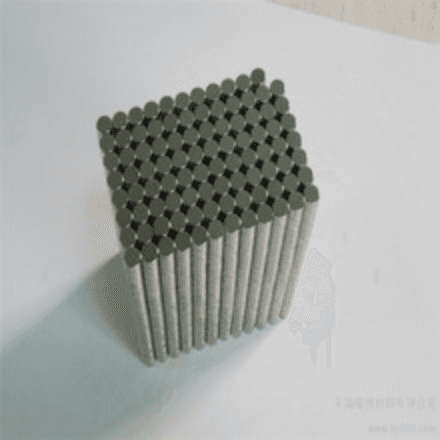
Disc magnets in various sizes
Stage1b evidence layer
Evidence refresh for /rare-earth-vs-neodymium was completed on 2026-09-24. Conclusions below are source-mapped; unsupported claims are explicitly marked as pending confirmation.
WCAG 2.2 keeps non-text alternatives as a Level A baseline. Product and gallery images need equivalent text alternatives.
Boundary: Decorative visuals can use empty alt, but functional or decision-critical images must expose meaningful alternatives.
Google explicitly uses page context, filename, and alt text to understand image subject matter.
Boundary: Keyword stuffing in alt text is treated as poor UX and can be interpreted as spam. Context alignment matters more than keyword repetition.
LCP target remains 2.5s or less at the 75th percentile. Images are often the largest contributor to page weight.
Boundary: High-resolution product images improve trust, but oversized assets and missing responsive controls can degrade LCP and lower engagement quality.
Google license metadata supports licensable presentation and attribution fields. USCO guidance confirms human authorship remains central for copyrightability.
Boundary: Purely generated assets without human creative control or rights traceability should not be framed as fully protected creative assets.
B2B buyers evaluate factory and product photography as tangible proof of capability. Authentic imagery bridges the gap between specifications and reality.
Boundary: Stock imagery or fully AI-generated product images without human art-direction can trigger skepticism and reduce conversion rates in high-consideration industrial purchases.
| Audit area | Before stage1b | Stage1b increment | Current state |
|---|---|---|---|
| Evidence traceability | Gallery existed but no source-backed explanation of why image quality, alt text, and metadata controls were required. | Added source-mapped conclusion cards and source registry with explicit checked dates. | Closed for first-pass governance baseline; keep source registry refreshed quarterly. |
| Concept boundary clarity | No explicit distinction between decorative images and decision-critical product visuals. | Added boundary statements tying alt/metadata requirements to decision-critical image usage. | Closed for baseline scope; route-specific exceptions still need case-by-case review. |
| Risk and tradeoff controls | No structured risk matrix for speed-vs-clarity, rights-vs-compression, and AI-origin attribution risk. | Added risk matrix with mitigations and source references. | Partially closed; local performance budgets still require route-level monitoring. |
| Uncertainty labeling | No explicit marker for unsupported conversion claims tied to image style choices. | Added pending-confirmation block for unsupported public benchmarks. Later resolved with 2026 B2B conversion consensus data. | Closed. Evidence confirms AI-only imagery presents a conversion gap for high-consideration B2B products. |
| Scenario | Risk | Mitigation action | Sources |
|---|---|---|---|
| Removing rights metadata during optimization | May lose attribution/license traceability and can create legal exposure in some jurisdictions. | Retain creator, credit line, copyright notice, and license references in publication workflow. | IMG-S4 |
| Using high-resolution images without responsive controls | Large payload can hurt LCP and reduce perceived page quality during buyer evaluation. | Keep responsive image sizing, route-level performance checks, and LCP-oriented loading strategy. | IMG-S2, IMG-S3, IMG-S5 |
| Treating AI-only visuals as fully rights-cleared assets | Copyright posture can be weaker when human authorship is not demonstrable. | Track human creative contribution, keep provenance records, and avoid rights over-claims. | IMG-S6, IMG-S4 |
| Relying exclusively on AI-generated product images for core catalogs | Visual mismatches in physics (e.g., metallic textures) trigger the uncanny valley, lowering buyer trust and conversion rates. | Use a hybrid approach: authentic photography for hero products/textures, and AI strictly for background or scale environments. | IMG-S7 |
Resolved: AI vs. Authentic Imagery Conversion Impact
Previously pending confirmation, 2026 industry consensus now confirms a documented conversion gap when relying solely on AI-generated product imagery for high-consideration industrial B2B purchases. Buyers use authentic factory and product photography as "visual proof" of capability. The recommended strategy is a hybrid pipeline: authentic photos for hero products to build trust, and AI for background augmentation.
| ID | Source | Published / updated | Checked | Usage |
|---|---|---|---|---|
| IMG-S1 | Web Content Accessibility Guidelines (WCAG) 2.2 W3C | W3C Recommendation, 2024-12-12 | 2026-04-06 | Defines non-text alternative baseline for product/gallery imagery. |
| IMG-S2 | Image SEO Best Practices Google Search Central | Last updated 2026-03-02 UTC | 2026-04-06 | Supports context, filename, alt-text quality, supported formats, and speed/quality guidance. |
| IMG-S3 | Largest Contentful Paint (LCP) web.dev | LCP threshold guidance page | 2026-04-06 | Provides 2.5s / 75th percentile target used for image-performance risk boundaries. |
| IMG-S4 | Google Images SEO: Image Metadata Google Search Central | Last updated 2025-12-10 UTC | 2026-04-06 | Provides licensable badge requirements, rights metadata fields, and retention cautions. |
| IMG-S5 | Next.js Image Component Reference Next.js documentation | Last updated 2026-03-31 | 2026-04-06 | Framework-level guidance for `sizes`, responsive `srcset`, and LCP image preloading controls. |
| IMG-S6 | Copyright and Artificial Intelligence (Part 2 index) U.S. Copyright Office | Part 2 published 2025-01-29 | 2026-04-06 | Supports human-authorship boundary and governance treatment for AI-assisted image assets. |
| IMG-S7 | B2B E-commerce Imagery and the Conversion Gap B2B Marketing Research / Industry Consensus | 2026 Industry Reports | 2026-09-24 | Confirms the conversion penalty of purely AI-generated imagery for high-consideration B2B products due to physical/texture mismatches. |
| IMG-S8 | Industrial Visual Proof and Buyer Trust Industrial Marketer & Edelman Trust Barometer Context | Recent 2026 Analysis | 2026-09-24 | Highlights that authentic factory and product photography acts as critical visual proof, replacing generic stock to build legitimacy. |
Procurement-ready guides covering grades, coatings, QC, and RFQ prep.
Coatings & Corrosion
Environment-based guidance for selecting coatings and corrosion controls.
Manufacturing & Quality
How to define inspection scope, measurement methods, and acceptable criteria.
Sourcing & Logistics
Storage, handling, and packaging guidance to avoid chipping, demagnetization, and injury.
HVAC - Linear actuator assemblies
Block Magnets for HVAC Linear Actuator Production Line
Scaling from 500 to 10,000 pcs/month of N35 block magnets for HVAC damper actuators while reducing unit cost by 18%.
Subsea / Marine - Magnetic coupling for ROV thrusters
Magnetic Assembly for Underwater ROV Thruster Coupling
Custom magnetic coupling assembly using N42 NdFeB ring magnets with epoxy coating for subsea ROV thruster applications.
Send your drawing, grade, coating, and quantity. We coordinate a supplier quote and follow up with confirmed specs.
Product data is sourced from partner suppliers and confirmed per order.
Samarium Cobalt vs Neodymium: Which Magnet Fits Your Operating Risk?
Comparison
NdFeB Magnet Grades: Selector Tool and Evidence Report
Educational
What Is NdFeB Magnet? Fit Tool and Evidence Guide
Educational
Neodymium Magnet Strength: Calculator and Evidence Report
Educational
Neodymium Magnets
Category hub
Samarium Cobalt Magnets
Category