| Global rare-earth mining concentration (2025 estimate) | World mine production: 390,000 t REO; China: 270,000 t (about 69% of global output). | [S1] USGS Mineral Commodity Summaries 2026 - Rare Earths Published 2026-02 Open source | Quantifies upstream concentration risk before locking single-lane, long-horizon contracts. |
| US import dependence signal for rare-earth compounds and metals | Net import reliance was 67% in 2025; source mix (2021-2024) was China 71%, Malaysia 13%, Japan 5%, Estonia 5%. | [S1] USGS Mineral Commodity Summaries 2026 - Rare Earths Published 2026-02 Open source | Supports dual-lane sourcing and buffer planning when project schedules are non-negotiable. |
| Demand growth context for rare-earth inputs | Rare-earth demand increased 6-8% in 2024 despite weaker EV momentum. | [S2] IEA Global Critical Minerals Outlook 2025 Published 2025-05; accessed 2026-02-20 Open source | Explains why lead-time and price-risk buffers remain relevant even when one end-market slows. |
| Sintered permanent-magnet concentration and export flow | China share reached about 94% of sintered permanent-magnet production and exported 58,000 t of rare-earth magnets in 2024. | [S3] IEA commentary on China critical mineral export controls (Oct 23, 2025) Published 2025-10-23; accessed 2026-02-20 Open source | Adds a concrete trigger for contingency lanes, especially for regulated and rush programs. |
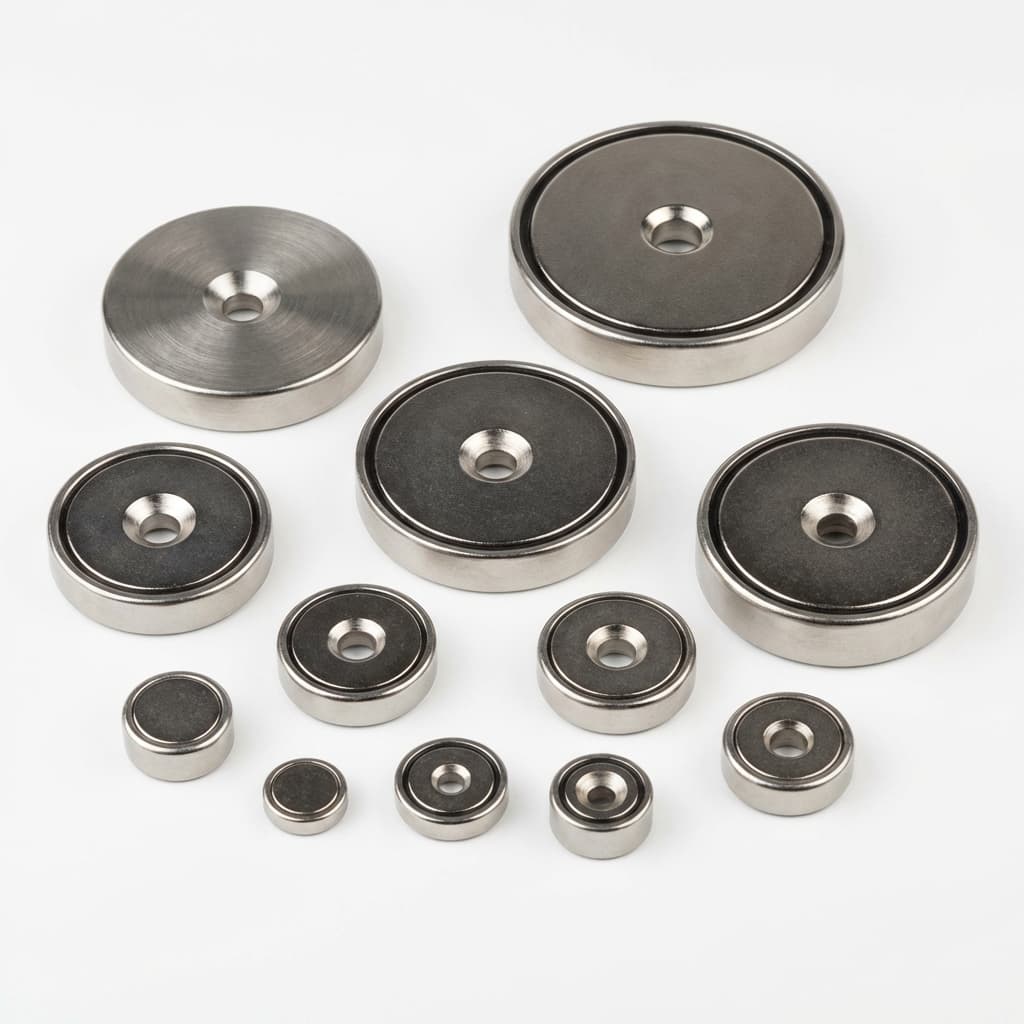
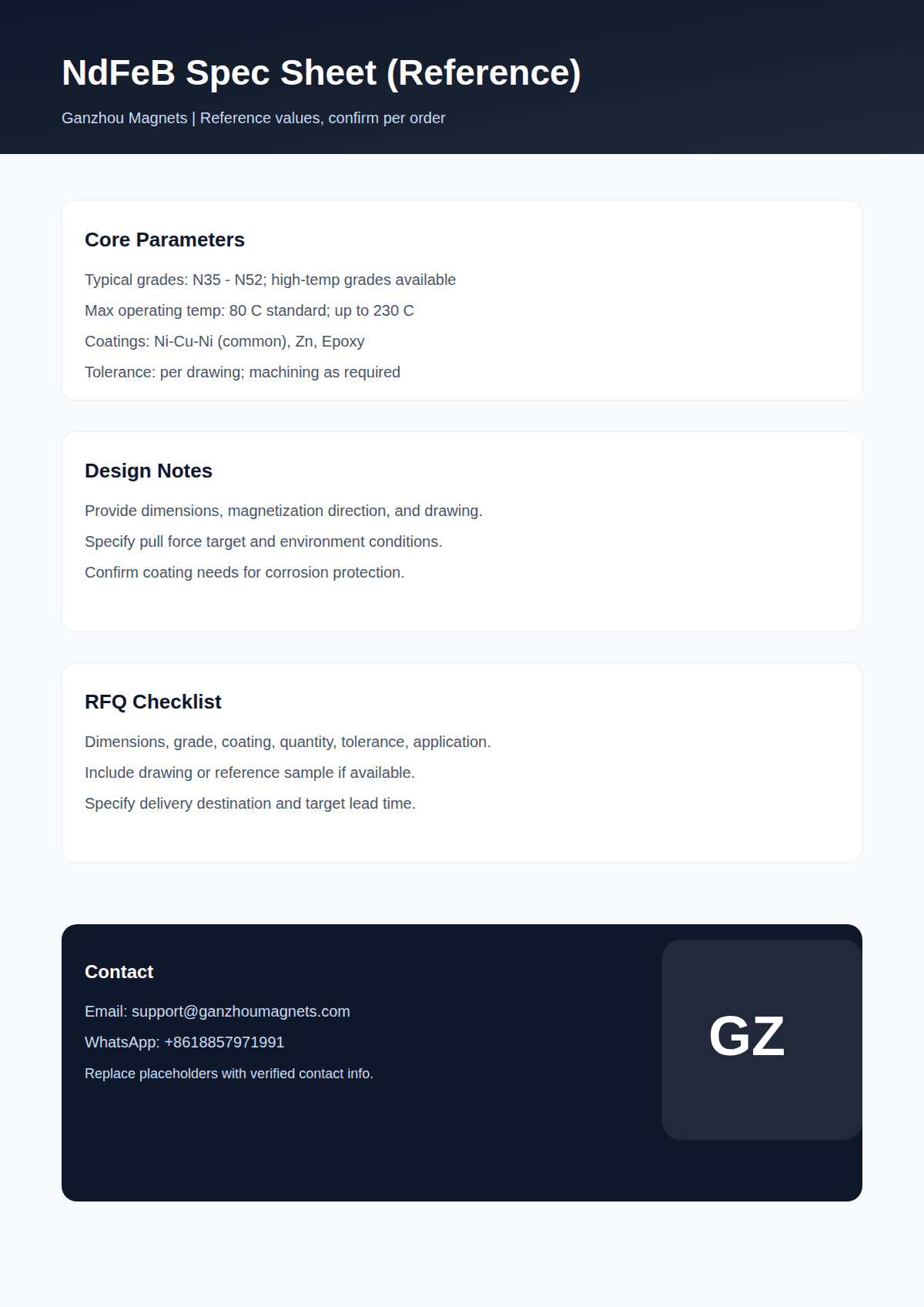
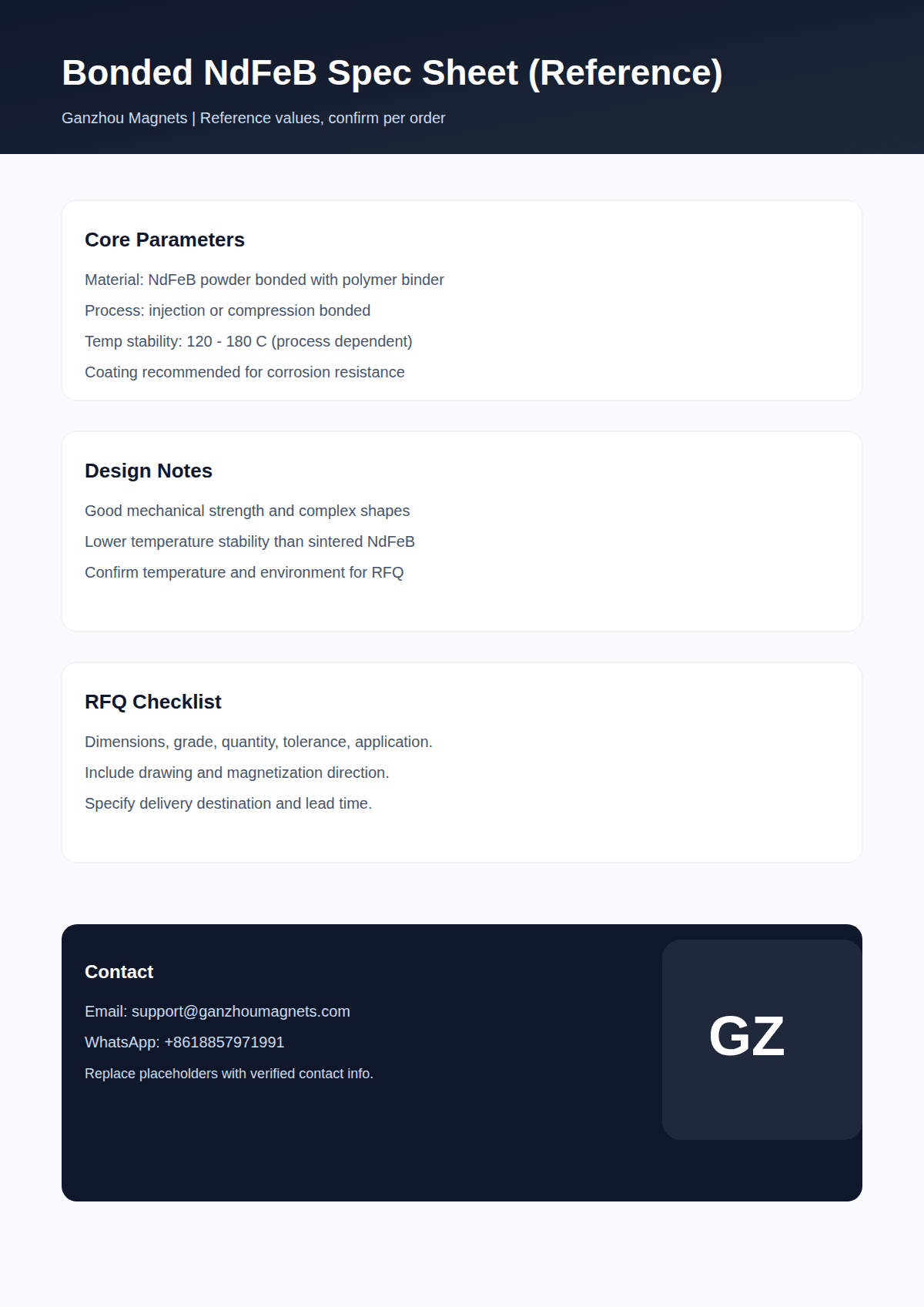
| NdFeB technical lane (material-level capability) | VACODYM reports (BH)max 28-53 MGOe, HcJ 875-3220 kA/m, and working temperatures above 200C depending on working point. | [S4] VACUUMSCHMELZE NdFeB (VACODYM) technical page Accessed 2026-02-20 Open source | Supports high-force compact lanes, but only when coercivity and operating point are validated. |
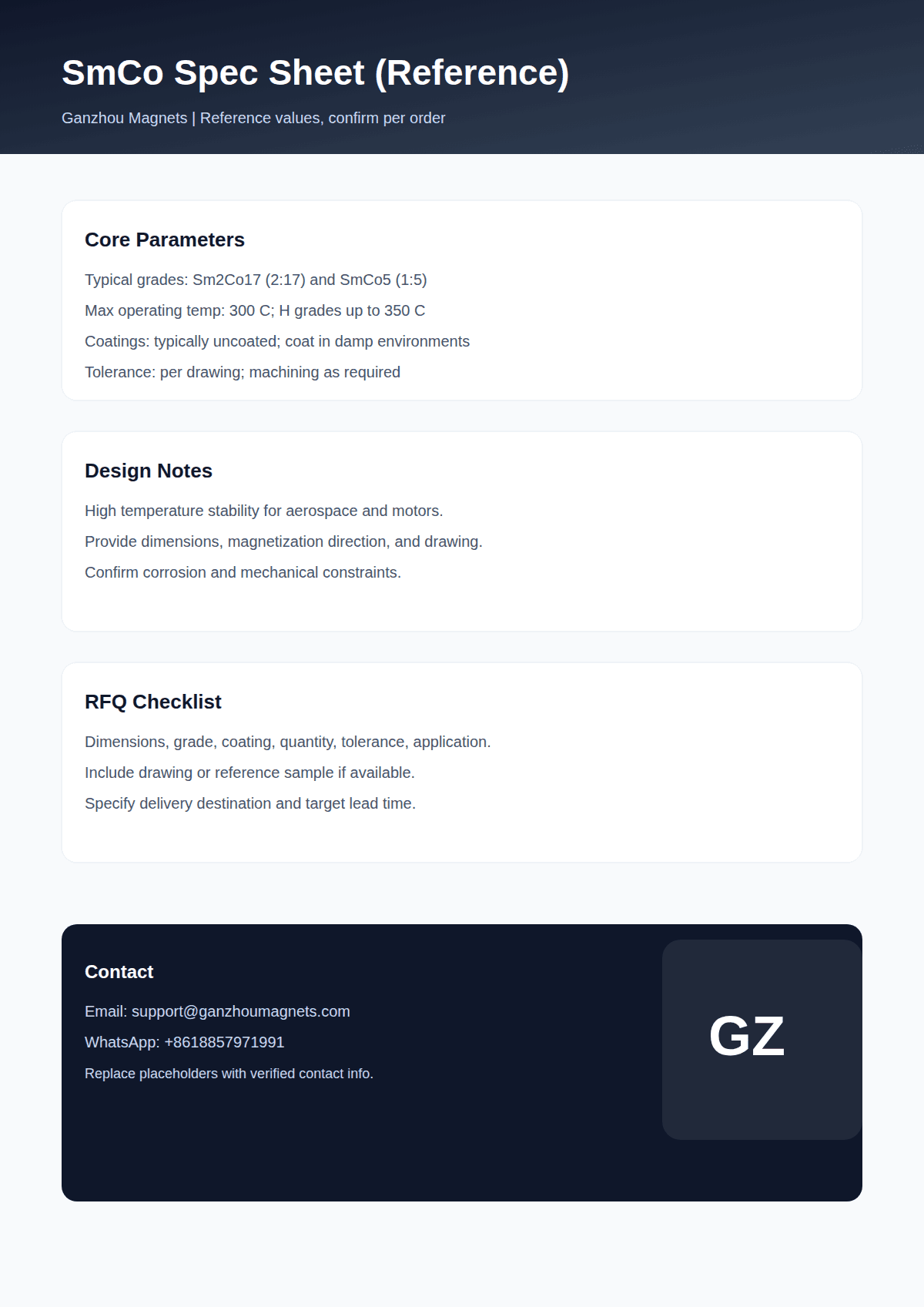
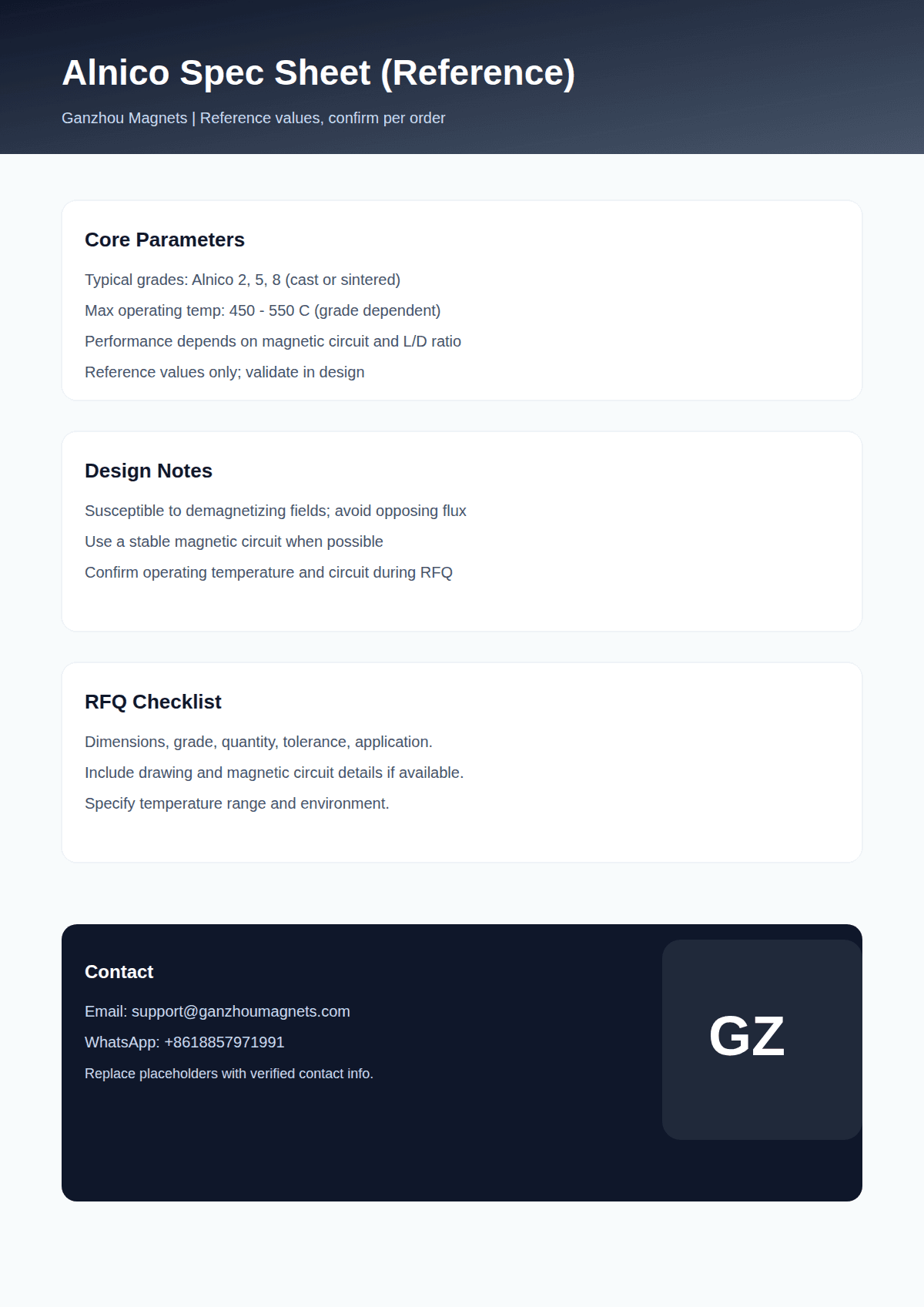
| SmCo technical lane (material-level capability) | VACOMAX reports (BH)max 20-33 MGOe, HcJ 600-2000 kA/m, max operating temperature up to 350C, and typically no coating requirement. | [S5] VACUUMSCHMELZE SmCo (VACOMAX) technical page Accessed 2026-02-20 Open source | Defines when thermal reliability outweighs higher material cost and machining constraints. |
| Demag-curve method boundary | IEC 60404-5 defines the method for measuring demagnetization and recoil lines of hard magnetic materials. | [S6] IEC 60404-5 standard scope Edition 5.0 (2015-01); accessed 2026-02-20 Open source | Prevents overconfident lane decisions made without method-consistent test data. |
| Permanent-magnet property classification boundary | IEC 60404-8-1 specifies values for magnetic properties and dimensional tolerances for permanent-magnet materials. | [S7] IEC 60404-8-1 standard scope Edition 3.0 (2015-03); accessed 2026-02-20 Open source | Separates baseline material compliance from application-specific assembly performance. |
| Salt spray test scope boundary (ISO) | ISO 9227 defines NSS/AASS/CASS apparatus and procedures, but does not define specimen type, exposure duration, or result interpretation. | [S8] ISO 9227 standard overview Revised 2022; accessed 2026-02-20 Open source | Stops teams from ranking coatings by hours alone without method context and acceptance rules. |
| Salt spray extrapolation limit (ASTM) | ASTM B117 notes that stand-alone salt spray duration rarely correlates directly with natural corrosion resistance. | [S9] ASTM B117 scope notes Current ASTM page; accessed 2026-02-20 Open source | Requires paired field-profile testing before converting coating hours into lifecycle promises. |
| RoHS substance threshold baseline for export programs | RoHS currently restricts 10 substances; concentration thresholds are 0.1% for most and 0.01% for cadmium in homogeneous material. | [S11] UK RoHS restricted substances guidance (aligned with EU RoHS set) Updated guidance page accessed 2026-02-20 Open source | Defines minimum declaration granularity before prototype-to-production transition. |
| REACH SVHC communication trigger | ECHA Candidate List reached 253 substances on 2026-02-04; Article 33 communication applies when SVHC exceeds 0.1% w/w and consumer requests require response within 45 days. | [S13] ECHA Candidate List update + supply-chain communication guidance Updated 2026-02-04; accessed 2026-02-20 Open source | Flags documentation and customer-response risk that can delay regulated or multinational shipments. |
| Prototype lead-time baseline for custom industrial magnets | 2 to 4 weeks after drawing + magnetization direction lock | [S14] Ganzhou sourcing panel sample RFQs (2025, n=214) Observed 2025-01 to 2025-12 | Sets expectation for trial run, not mass production commitment. |
| Mass-production lead-time baseline | 5 to 9 weeks depending on coating queue and inspection scope | [S14] Ganzhou sourcing panel sample RFQs (2025, n=214) Observed 2025-01 to 2025-12 | Used in schedule risk scoring and buyer planning buffer. |
| Unknown line item handling requirement | N/A must be explicit with owner and closure date | [S15] Internal hybrid-page QA standard Updated 2026-02-20 | Prevents pseudo-certainty in RFQ and review meetings. |